


CEP IIT Delhi's Certificate Programme in Generative AI - Batch 03 offers a deep dive into advanced AI techniques, focusing on Large Language Models (LLMs) like GPT, BERT, and T5. Starting with foundational concepts like Linear Algebra and progressing to Machine Learning, participants will gain hands-on experience with model optimisation techniques such as fine-tuning and Parameter-Efficient Fine-Tuning (PEFT). The programme also covers cutting-edge topics like Reinforcement Learning with Human Feedback (RLHF) and Vision-Language Models (VLMs). Participants will be equipped to apply LLMs in real-world scenarios and ensure responsible AI use.

Practical learning with tutorials and latest tools

Advanced curriculum for cutting-edge AI expertise

6-month, online programme for working professionals

60 hours of online live sessions by IIT Delhi faculty and industry experts

Peer-learning and networking opportunities

IIT Delhi Continuing Education Programme (CEP) Certificate










disclaimer: *The list of tools and topics mentioned is indicative and may be modified as per programme requirements and at the discretion of the Programme Coordinator.
Note: For more details download brochure.

Sunday 09:00 AM to 12:00 PM (IST)
Prof. Tanmoy is an Associate Professor of Electrical Engineering and the Yardi School of AI at the Indian Institute of Technology (IIT) Delhi. He leads the Laboratory for Computational Social Systems (LCS2), a research group specialising in Natural Language Processing (NLP) and Computational Social Science. His current research primarily focuses on empowering small language models for improved reasoning, grounding, and prompting and applying them specifically to two applications -- mental health counselling and Cyber-informatics.
Read More >
Tanmoy obtained his PhD in 2015 from IIT Kharagpur as a Google PhD scholar. Subsequently, he worked as a postdoctoral researcher at the University of Maryland, College Park, USA. Tanmoy has received numerous awards, including the Ramanujan Fellowship, the PAKDD Early Career Award, ACL'23 Outstanding Paper Award, IJCAI'23 AI for Good Award, and several faculty awards/gifts from companies like Facebook, Microsoft, Google, LinkedIn, JP Morgan, and Adobe. He has authored two textbooks – "Social Network Analysis" and “Introduction to Large Language Models.
Read Less <

Prof. Rachit Chhaya
Assistant Professor
Dhirubhai Ambani Institute of Information and Communication Technology (DA-IICT) Gandhinagar
Prof. Rachit is currently an Assistant Professor at Dhirubhai Ambani Institute of Information and Communication Technology (DA-IICT), Gandhinagar. He completed his PhD in Computer Science and Engineering at IIT Gandhinagar in 2022. His research focuses on scalable algorithms for machine learning problems with provable guarantees, specifically by creating small summaries of data called ‘coresets’. He has worked on machine learning problems involving regularisation and/or fairness constraints. He has published in prestigious venues like ICML, AAAI, AISTATS, and TMLR. Currently he teaches courses like machine learning and approximation algorithms. He has also been involved in various training programs on AI/ML.

Prof. Rahul Mishra
Assistant Professor
Language Technology Research Centre (LTRC),
International Institute of Information Technology Hyderabad
Prof. Rahul is an Assistant Professor at IIIT Hyderabad's Language Technology Research Centre (LTRC), where his research focuses on Controllable Text Summarisation, Misinformation Detection, Model Explainability, Graph Representation Learning, and Natural Language Generation. Previously, he served as a senior postdoctoral researcher at the University of Geneva, Switzerland, specialising in biomedical NLP. Prior to that, as a Senior Staff Engineer/Researcher, he contributed to research projects at Samsung Research Lab in Bangalore, optimising and benchmarking Large Language Models on Process in Memory (PIM) enabled GPUs. He holds a PhD from the University of Stavanger, Norway and an M.Tech from IIIT Delhi. During his doctoral studies, he also worked as a visiting researcher at the Computer Science Department of ETH, Zurich, Switzerland, and the University of Hannover, Germany. Before pursuing his PhD, he worked as an NLP data scientist in the automatic vehicle diagnostic department at KPIT Technologies, Pune, focusing on automatic fact extraction from car service manuals. Prior to that, he also held roles as a consultant researcher at Tata Research Development and Design Centre (TRDDC) and a research intern at IBM Research Bangalore.
Prof. Sriparna Saha
Associate Professor, Department of Computer Science & Engineering
Indian Institute of Technology Patna
Prof. Sriparna Saha is an Associate Professor in the Department of Computer Science and Engineering at the Indian Institute of Technology (IIT) Patna. She holds M.Tech and Ph.D. degrees in Computer Science from the Indian Statistical Institute, Kolkata, obtained in 2005 and 2011, respectively.
Her research interests encompass Artificial Intelligence, Machine Learning, Natural Language Processing, Multimodal Information Processing, Information Extraction, Text Mining, Bioinformatics, and Multiobjective Optimization. Dr. Saha has authored or co-authored over 400 publications and has also written a book published by Springer.
She is a Senior Member of IEEE and a Fellow of IETE. Her contributions to the field have been recognized with several awards, including the Lt Rashi Roy Memorial Gold Medal from the Indian Statistical Institute for outstanding performance in M.Tech (Computer Science), the Google India Women in Engineering Award (2008), the NASI Young Scientist Platinum Jubilee Award (2016), the BIRD Award (2016), the IEI Young Engineers' Award (2016), the SERB Women in Excellence Award (2018), and the SERB Early Career Research Award (2018).
Prof. Saha's h-index is 38, with a total citation count of 7,546, according to Google Scholar.

Karthikeyan Ramamoorthy
Architect, Freelancer
"Attending this course was a game-changer for me. The syllabus was comprehensive and up-to-date, providing practical knowledge that I can immediately apply. Crucially, the professors were exceptional mentors. Their teaching style fostered a deep understanding, and their willingness to go the extra mile to answer questions and offer support made a huge difference. I feel much more confident and capable after completing this program. Absolutely loved this course! The syllabus was perfectly planned – truly inspiring and effective educators. Highly recommended!"
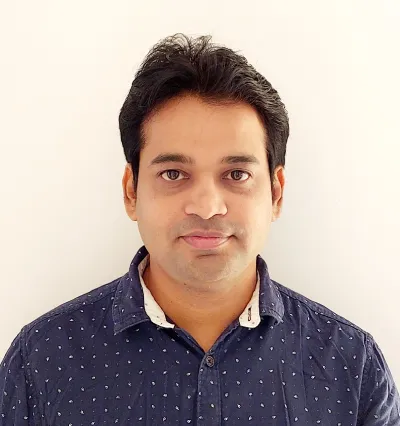
Sandesh Ghule
Technical Lead, Rockwell Automation
"My name is Sandesh, and I have 17 years of experience as a Lead Software Developer. I chose this course because I didn’t want to miss the Generative AI wave, and I wanted to strengthen my fundamentals in this fast-growing field. Through the program, I was able to learn the basics of Generative AI and understand how to apply them to real-world problems. This has not only expanded my technical toolkit but also opened up new possibilities for me to explore in my career. I highly recommend this course to anyone who wants to get a solid foundation in Generative AI and be ready to leverage it in practical scenarios."
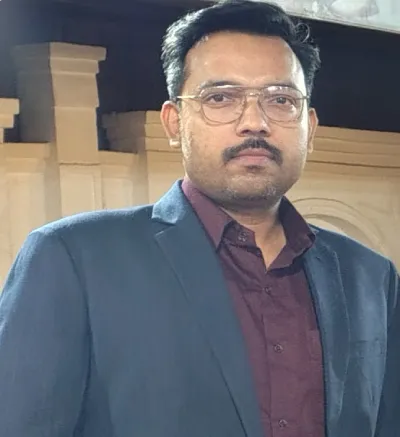
Piyush kumar tripathi
PGT(Physics), Saraswati Vidya mandir
" This course has enhanced my knowledge in space of GEN AI ,and made to be a part of upcoming competitive scenario of changing time where AI will be dominative in every sector.Being a physics teacher ,this course improved my knowledge in coding area in different aspects.I can switch to different domain in AI sector also. The main reason to join this course was the changing scenario of world in field of AI which will be dominating in future in every sector.so it's a demand and need of having knowledge of AI specially from top Institute in india."
Admission to the program is based on a comprehensive review of your application.